Great Depression Folk Art: Doris Lee Minimalist Abstract Painting Style








詳細
ファイルをダウンロード (1)
このバージョンについて
モデル説明
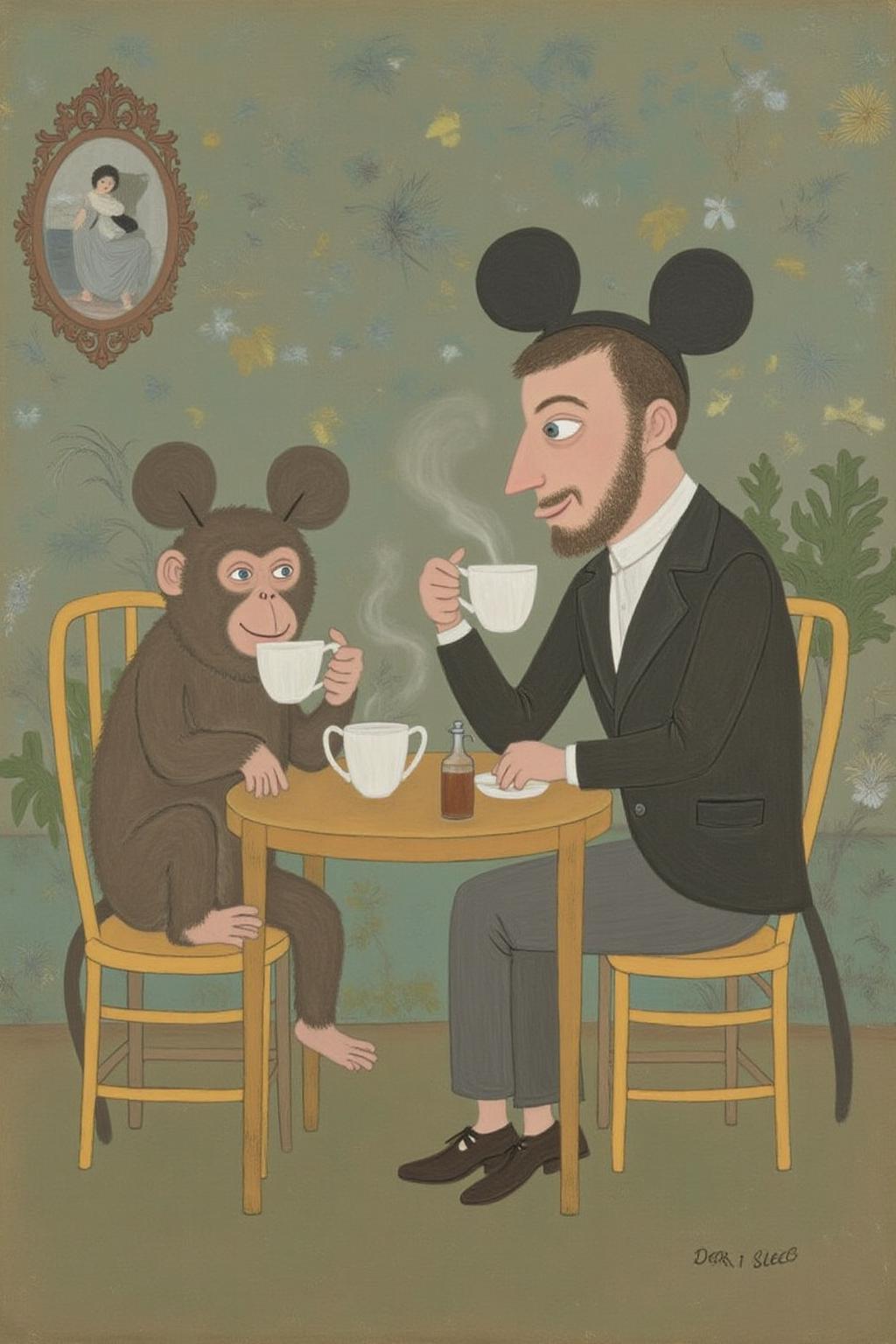
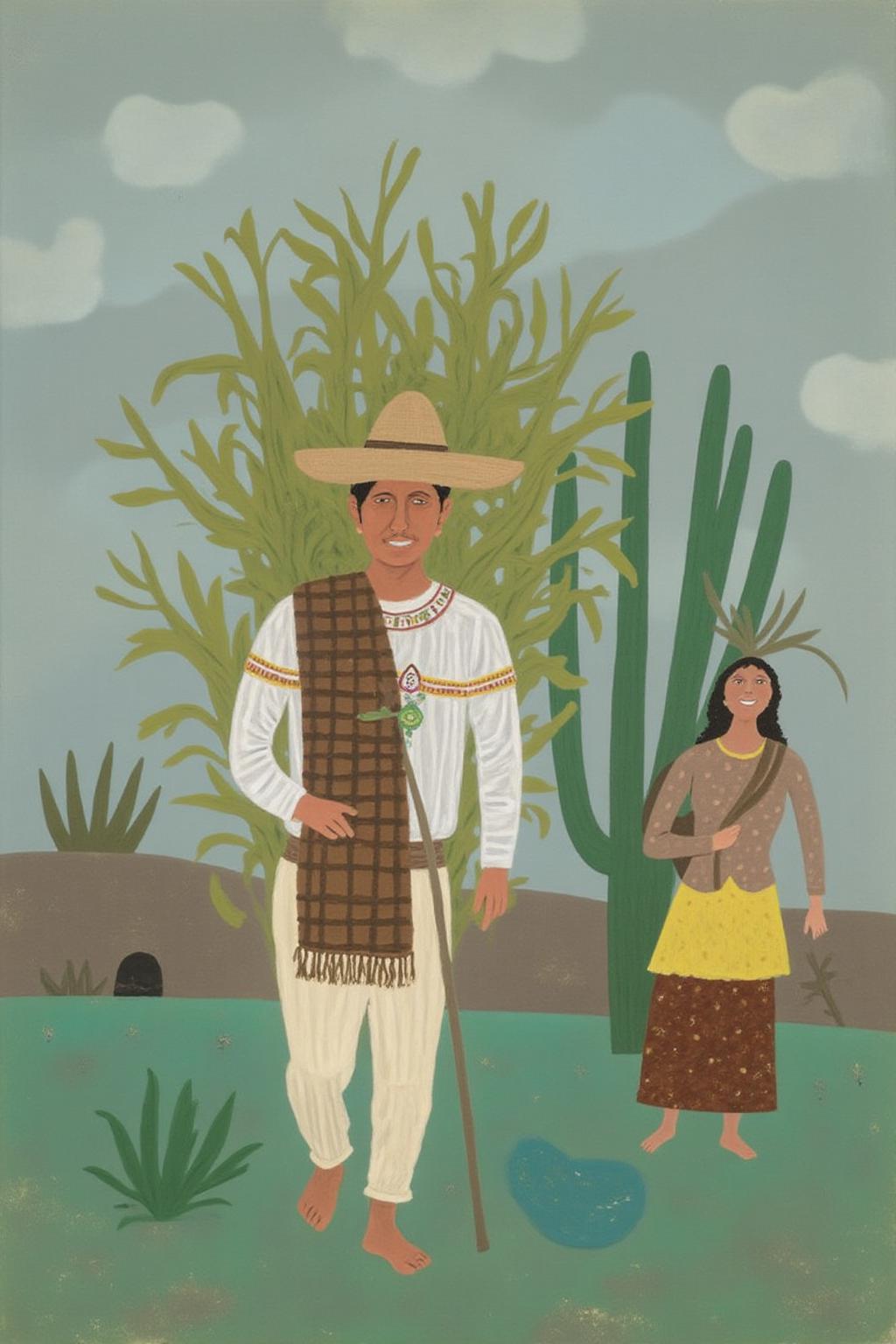
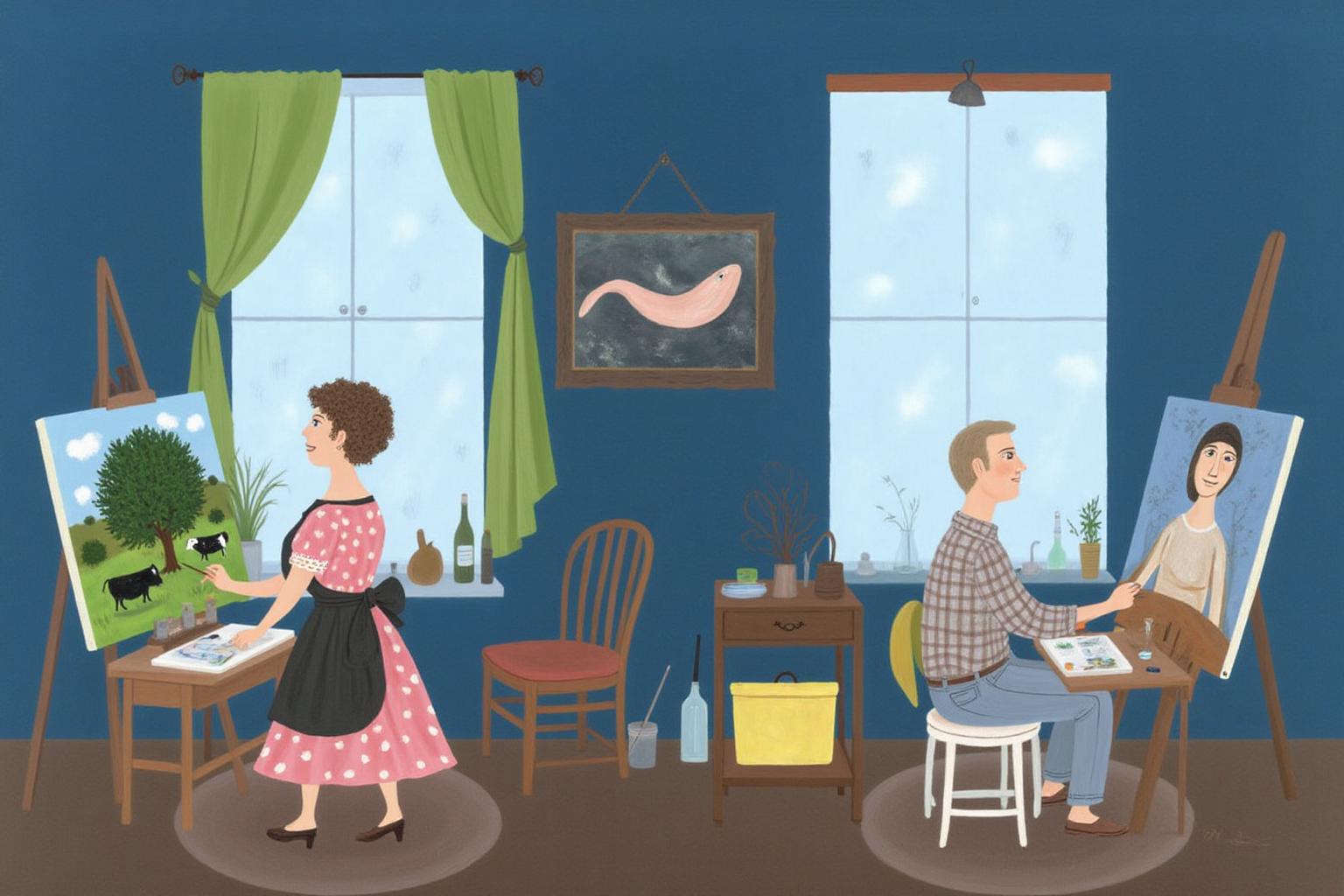
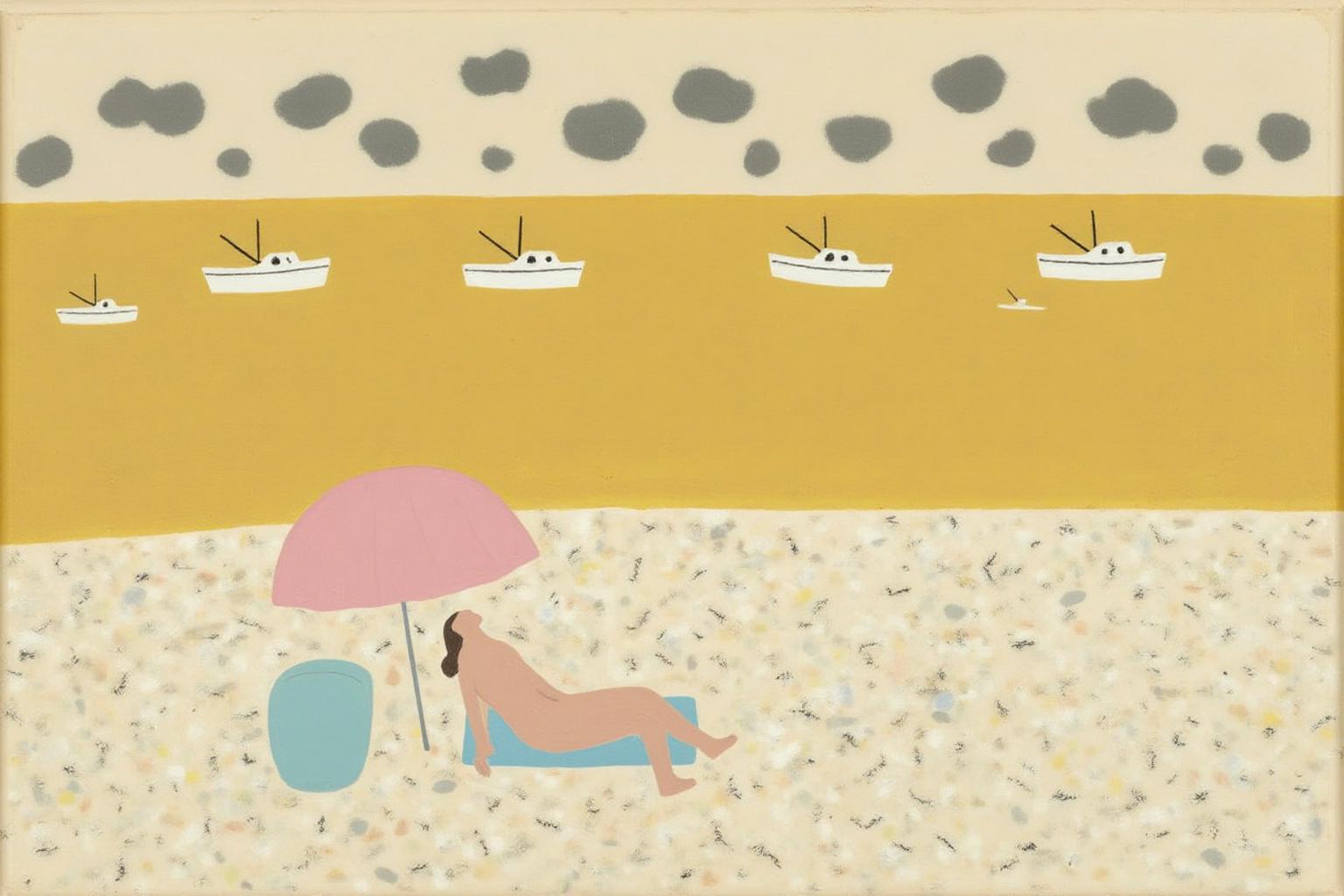
Trained on 23 paintings by the American artist Doris Emrick Lee (February 1, 1905 – June 16, 1983). To see her works, please go to
https://www.invaluable.com/artist/lee-doris-emrick-d0pfymovun/sold-at-auction-prices
https://magpiesmagazine.com/2024/03/07/simple-pleasures-the-art-of-doris-lee
I kind of cheated on the title. This LoRA is actually based on her later, post Great Depression paintings that are more abstract and minimalistic, which I found more appealing than her earlier, more traditional works. She is an artist who found her inner 5-yo later in life, so she has no need to this LoRA: Can you draw like a five-year-old? Children's Crayon Drawing Style 😹
From ChatGPT:
Doris Lee (February 1, 1905 – June 16, 1983) – American Painter & Illustrator of Everyday Life
Doris Emrick Lee was a celebrated American painter, muralist, and illustrator, best known for her warm, folksy depictions of American life. Active from the 1930s to the 1950s, she gained wide recognition for her playful, narrative style that celebrated the simplicity of rural and domestic scenes, blending folk art traditions with modernist tendencies.
1. Early Life & Education
Born Doris Emrick Shook in Aledo, Illinois, in 1904.
Attended Rockford College (now Rockford University), graduating in 1927.
Studied painting in Paris and San Francisco, and later with the artist Ernest Lawson in New York.
By the early 1930s, she was part of New York’s vibrant art scene.
2. Rise to Fame
🔹 Lee became nationally recognized in 1935, when she won the prestigious Logan Medal of the Arts for her painting “Thanksgiving”, a charming, bustling scene of women preparing a holiday meal.
🔹 The painting’s combination of humor, warmth, and narrative detail reflected her growing interest in capturing everyday life in rural America, a theme that resonated deeply during the Great Depression era.
3. Artistic Style
🎨 Folksy Realism – Her work has a charming, slightly naïve quality, with simplified forms and flattened perspectives that borrow from folk art traditions.
🎨 Warm & Accessible – Unlike more abstract modernists, Lee’s work was designed to be understood and enjoyed by everyone, bridging fine art and illustration.
🎨 Playful Narrative Scenes – Often bustling with people, animals, and activity, her paintings capture the joy and complexity of everyday life.
🎨 Decorative Modernism – Although her subjects were often rural or domestic, her style incorporated modernist design sensibilities, especially in her color choices and compositions.
4. Key Themes
✅ Rural & Domestic Life – Farm scenes, family gatherings, daily chores, and celebrations.
✅ Women’s Lives – Highlighted the everyday work and cultural roles of women, making her one of the important early female painters of American life.
✅ Travel & Exotic Scenes – Later in her career, she traveled extensively, incorporating scenes from Mexico, Cuba, and the Caribbean into her work.
✅ Murals & Public Art – During the New Deal, she was commissioned to create murals for post offices and public buildings, celebrating American industry, agriculture, and community spirit.
5. Notable Works
✅ Thanksgiving (1935) – Her breakout piece, now in the Art Institute of Chicago.
✅ Post Office Murals – Created for Washington, D.C., and other cities under the WPA program, highlighting the American spirit during the Depression.
✅ Catskills Farm Scene (1947) – A lively depiction of life in upstate New York, where Lee had a summer home.
6. Illustration & Commercial Work
📚 Besides painting, Lee was a prolific illustrator:
Illustrated children’s books, magazines, and advertisements.
Contributed to Fortune, Life, and The Saturday Evening Post, where her images of village life and cheerful domesticity were beloved by readers.
She also designed textiles and wallpaper, blending her love of folk imagery into decorative arts.
7. Later Life & Legacy
In the 1950s and 60s, Lee’s popularity waned somewhat as abstract expressionism became dominant, but she continued painting and exhibiting.
Lee died in 1983 in Clearwater, Florida, leaving behind a rich legacy of images that celebrate American life with humor, grace, and warmth.
In recent years, her reputation has been revived, especially as interest in women artists and artists working outside the mainstream modernist canon has grown.
Her work is now held in major collections, including:
The Art Institute of Chicago
The Smithsonian American Art Museum
The Whitney Museum of American Art
8. Influence & Recognition
🌟 A Bridge Between Folk & Modern Art – Lee showed how traditional scenes could be infused with modernist design elements, making her work both accessible and sophisticated.
🌟 A Champion of Everyday Women – Long before the feminist art movement, Lee’s work consistently centered women, depicting their work, celebrations, and inner lives with respect and humor.
🌟 A Folk-Modern Fusion – Her ability to blend narrative folk traditions with modern color palettes and design sensibilities made her work uniquely American and distinct.