ComfyUI beginner friendly AuraFlow Text-to-Image GGUF Workflow by Sarcastic TOFU


Details
Download Files (1)
Model description
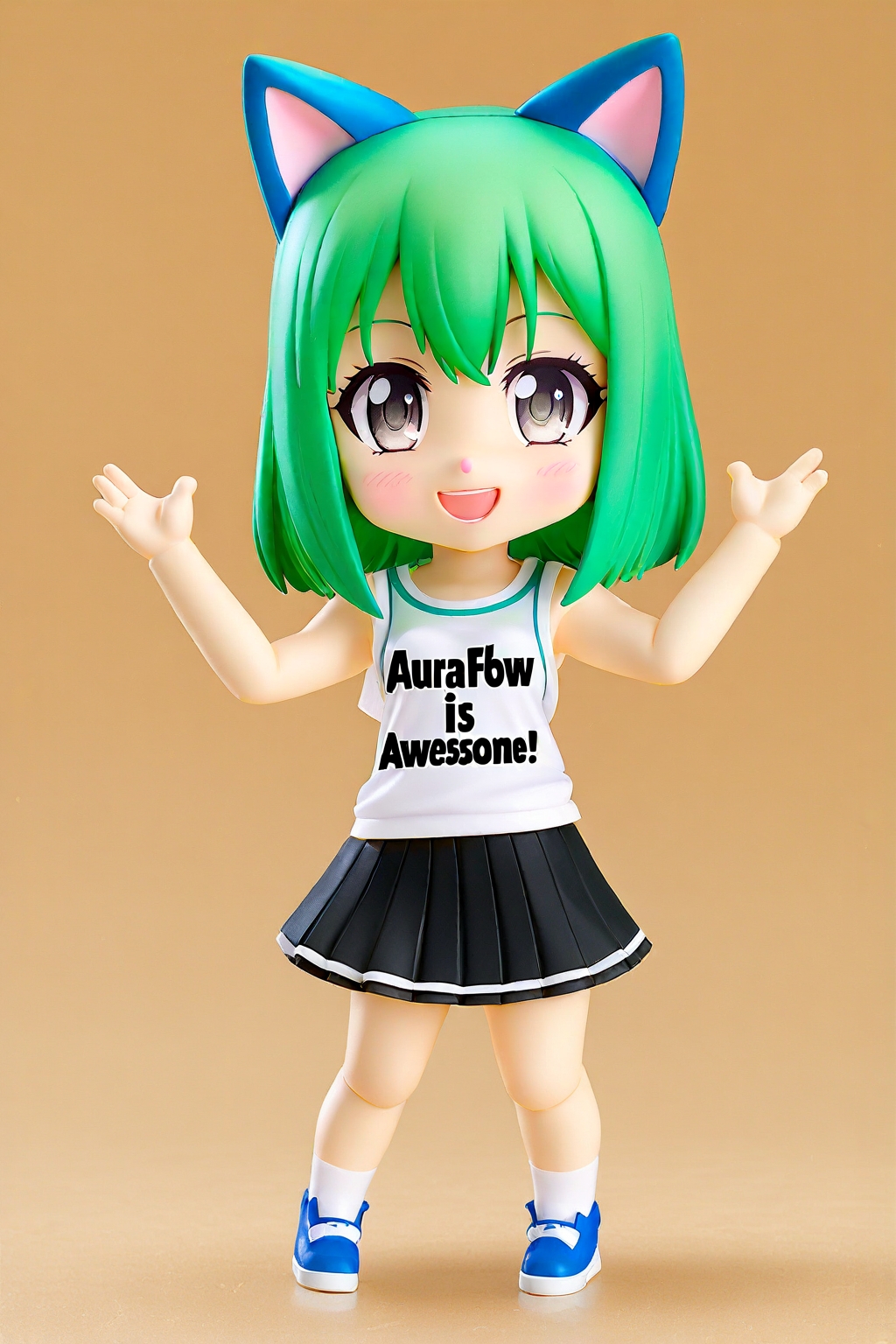
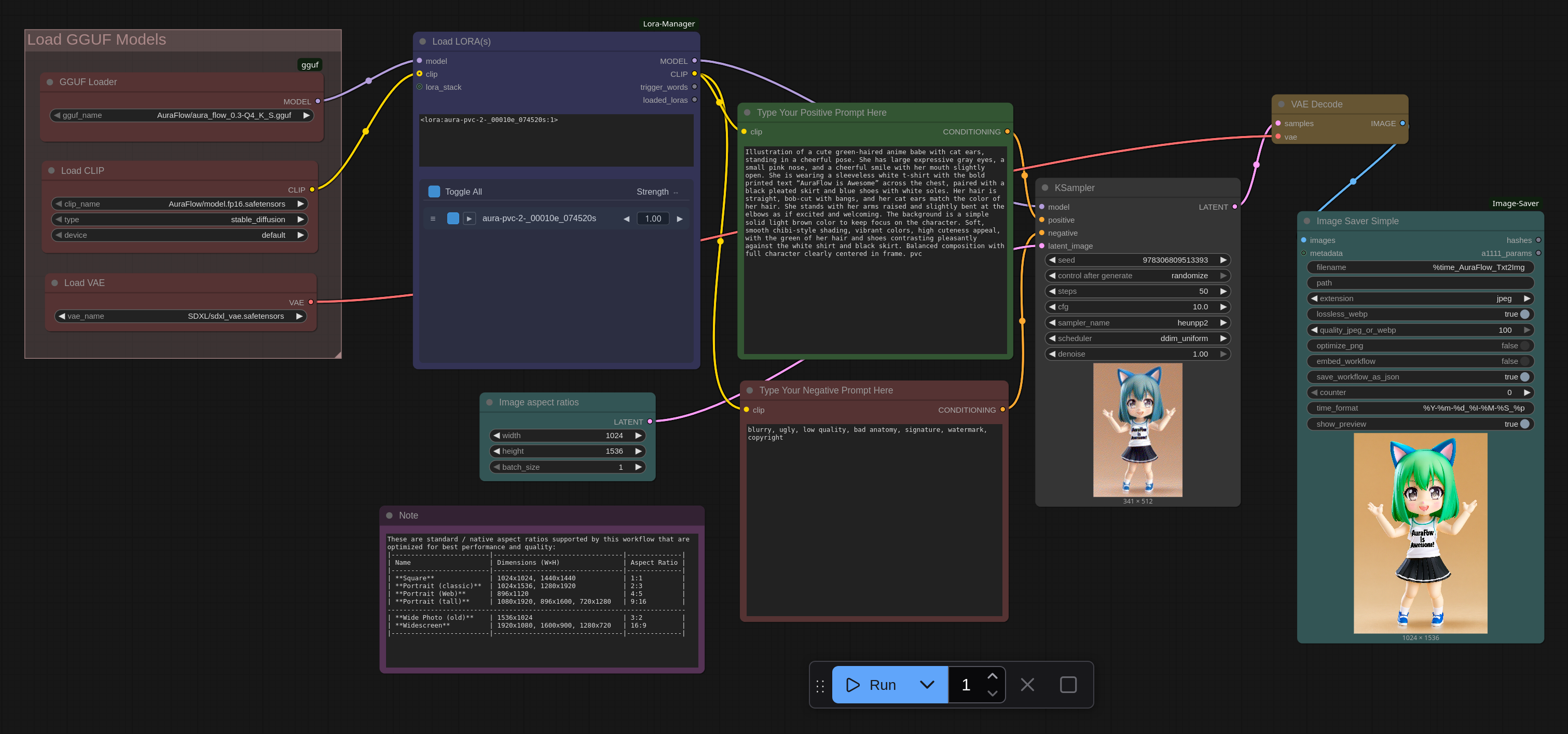
This is a very simple ComfyUI beginner friendly Text-to-Image workflow that will work with a single AuraFlow GGUF model with multiple LORAs (This workflow does require ComfyUI's LORA Manager plugin to function. It is a good idea to install both ComfyUI manager and LORA Manager plugin to help you easily download and manage Checkpoints, LORAs and other resources. Not only these two are helpful for this workflow but they will help you a lot in any other cases). You need a Hugging Face account to download your necessary AuraFlow model files (Details are mentioned below). Make sure you install GGUF addon for ComfyUI using ComfyUI manager and place the correct files in correct places. Also check out my other workflows for SD 1.5 + SDXL 1.0, WAN 2.1, WAN 2.2, QWEN, HiDream, KREA, Chroma and Flux. In my personal experience I have found this AuraFlow model a good middle-ground model between SDXL 1.0 models and Flux models. AuraFlow is a fully open-source, flow-based text-to-image generation model with 6.8 billion parameters, developed by Fal AI. It achieves state-of-the-art results on GenEval, a benchmark for measuring text-to-image model performance. The model is currently at version 0.3 and is licensed under Apache 2.0, making it completely free to use and modify. This can generate nearly as good quality image output as Flux can (it's quality is more like SDXL, but better especially for generating better texts within output image) with less resources than Flux. It gives prompters options to provide negative prompts for some additional control of output (like SDXL). This uses regular SDXL VAE (you can use existing one for SDXL) and sometimes work very well with your existing SDXL LORAs (only with few lucky LORAs, you may encounter many issues with most). This is definately worth trying!
How to use this -
#1. Just select your desired AuraFlow GGUF model first and then load
#2. one or multiple matching LORA(s) from LORA Manager to start
#3. then input your positive and negative prompts.
#4. select how many images you want (Change the number besides the "Run" button)
#5. select image output dimensions, sampling methods, CFG, steps etc. settings and any other optional settings
#6. finally press the run button to generate. That's it..
*** This workflow will also function if you know how to properly disable the LORA Node and bypass it.
Enjoy!
### To use this workflow you need to log into huggingface and download necessary files from there (I also included a text file on the archive that has the workflow file, in which you will find even more links for essential downloads for my other workflows) -
## Required Models
=========================================================================================================================
### Download Links for AuraFlow Checkpoints
https://huggingface.co/city96/AuraFlow-v0.3-gguf/resolve/main/aura_flow_0.3-Q4_K_S.gguf
### Download Links for AuraFlow Encoders
https://huggingface.co/fal/AuraFlow-v0.3/resolve/main/text_encoder/model.safetensors
### Download Links for SDXL VAE (Note - AuraFlow uses the standard SDXL VAE)
https://huggingface.co/stabilityai/sdxl-vae/resolve/main/sdxl_vae.safetensors
% LORA Used in this Workflow example (you can use this or other LORAs or no LORAs)
----------------------------------------------------------------------------------
PVC style LoRA for AuraFlow v0.3 - https://civitai.com/models/1103752?modelVersionId=1239914