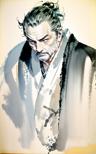
Bada Shanren 八大山人


詳細
ファイルをダウンロード (1)
このバージョンについて
モデル説明
weight 0.5~1
trained by public public domain image
https://en.wikipedia.org/wiki/Bada_Shanren
Zhu Da (朱耷), also known by his pen name Bada Shanren (八大山人), was a late-Ming and early-Qing dynasty Chinese painter, calligrapher, and poet. He was born in Nanchang, Jiangxi, in 1626, at during the Ming-Qing Transition.[1] Zhu was mentally ill and displayed erratic behavior.[2] He was related to the House of Zhu, which got destroyed and executed by the new Qing dynasty. Fearing that he would also be purged and executed, he fled to a Buddhist temple and learned the teachings of Chan (Zen) Buddhism, becoming a monk for 30 years.[3]
He spent most of his early to mid-life in the Buddhist monkhood, returning to Nanchang when he was about fifty years old.[4] He embarked on an artistic career soon after reentering secular life in 1680, producing works that featured his calligraphy, painting, and poetry.[5] Most of the time, he painted simple subjects like flowers, plants, and animals and kept most of the given space empty.[5] Toward the end of his life, he started painting more landscapes.[6][7]
Some of his artwork were metaphors on the fall of the Ming dynasty and its failure after being destroyed by the Qing.[8] His poems often included
八大山人(1626年—1705年),譜名統𨨗(「𨨗」音「勸」),訓名耷,法名傳綮,字刃庵,號八大山人、彭祖、雪个、个山、个山驢、驢屋、人屋、道朗等,江西新建人,祖籍直隸鳳陽(今安徽),明朝宗室、輔國中尉、書畫家,與石濤、髡殘、弘仁並稱為清初「四僧」。
生平
寧獻王朱權九世孫,弋陽僖順王朱覲鐰六世孫。父親鎮國中尉朱謀𪇼為啞巴,巧心善畫。明朝滅亡後,國毀家亡,心情悲憤,剃髮為僧;後改為當道士。妻子去世後,自號八大山人[5]。其於畫作上署名時,常把「八大」和「山人」豎著連寫。前二字又似「哭」字,又似「笑」字,而後二字則類似「之」字,「哭之笑之」即哭笑不得之意。
如果你喜歡我的工作可以幫我買杯咖啡,謝謝
If you like what I do, you can buy me a cup of coffee. Thanks.
私の仕事を気に入っていただけたら、コーヒーを一杯おごってください。 ありがとうございます。