Pony Pregnancy


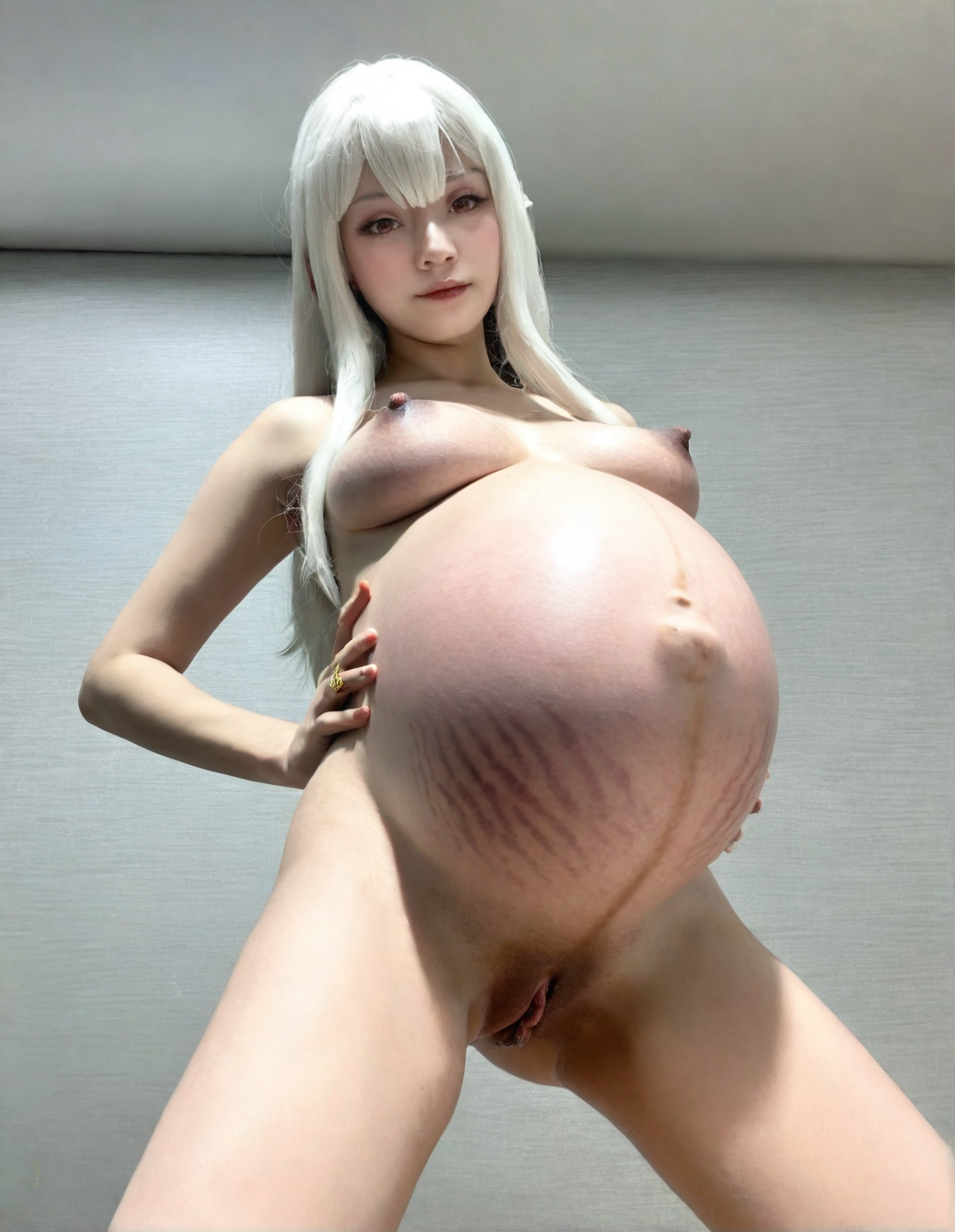


Details
Download Files (1)
Model description
Pony Pregnancy — Pregnancy & Postpartum Anatomy Model NSFW & SFW
A fine-tuned Pony checkpoint focused on pregnancy and postpartum abdominal morphology. It’s designed for clinical/realistic depiction (not stylized anime) with expressive tagging to control the shape and features of the stomach. In addition, postpartum conditions are captured for a consistent before, during and after transition, which includes wrinkling, overhang, diastasis, popped navels etc.
What's new in v1.0?
The latest release is much improved on overall visual fidelity and responsiveness to prompts. There are also a lot more images in the data set non-pregnancy related which helps to ensure concepts are not lost or overridden if they aren't well represented in available pregnancy imagery.
✅ Key Tags
Important
Phase-locked mandatory control with two anchors:
phase_pregnant- use to generate pregnancy materialphase_postpartum- use to generate postpartum material
Ethnicity
chinese,european- more refinement to come
Pregnancy
Trimester control with:
first_trimester,second_trimester,third_trimesterTip: control overall size with more refinement by weighting phase_pregnant between ~0.5 - 1.0
Textural control with:
gigantic bellystretch marksflat navelslit naveldeep naveloutie navel / huge outie navellinea alba / hyperpigmentation
Expanded Attire control with:
shirt overhangdress overhang
Postpartum
Postpartum taxonomy for nuanced outcomes:
pp_deep_creases- heavy wrinklingpp_crepey_skin- subtle loose skin, noticeable affected skin texturepp_panniculus- belly apron, skin that hangs and folds over the groin areapp_hidden_navel- navel occluded by loose skin folding overpp_frowning_navel- downturned/hooded lookpp_flat_navel- navel that didn't return to an innie and is flat along the stomachpp_diastasis_recti- ab separation causing a soft squishy bellypp_dr_mild/moderate/severe- severity of the ab separationstretch marks- future improvement will differentiate between fresh stretch marks and faded out ones
📸 Recommended Settings
Sampler: DPM++ 3M Karras / Euler a
Each has slightly different characteristics, use your personal preference
With Forge, I have found DPM++ 3M to give the most realistic appearance and skin texture, but does add a bit of fuzz like you'd get from amateur photography (as is most of the dataset out of my control). Euler a will give you sharper results, but slightly less realistic
Steps: 25–35 (Euler a) · 28–40 (DPM++ family)
CFG: 4.5–6.5
Resolution: 1024×1024 (train res), or 832×1216 / 1216×832 if composing full height
Hires fix / Upscale: optional 1.2–1.6× with a gentle denoise (0.2–0.35) to sharpen textures
Working with niche characters?
You can a LoRA of the character you want to generate, and if from an anime source, set to a CLIP strength of 0.5. You'll still capture their details decently, pairing with (big eyes) in negative prompt to stay grounded in reality.
🧩 Prompt Guidelines
Captioning rules:
Prefix every pregnancy prompt with:
phase_pregnant, trimester_X, X navel, ethnicity ...Prefix every postpartum prompt with:
phase_postpartum, pp_X, pp_Y, ethnicity ...
Note: Existing pregnant tag is unnecessary.
Belly size:
The belly size is very flexible, but takes a little bit of tweaking to get it perfect. As mentioned above, you can control overall size with more refinement by weighting phase_pregnant between ~0.5 - 1.0 in the prompt. First trimester in some cases may still show a larger belly, but you can reduce it with the phase reduction.
As an experiment, I found that gigantic belly gives much larger pregnant bellies than what is currently in the dataset with realistic properties still retained. Try this for triplet + bellies.
Please also check out the metadata of the images provided above on this model.
Why not a LoRA?
I chose a full Pony fine-tune instead of a LoRA because the goal was precise, clinical anatomy without fighting the base model’s priors.
Fidelity over flexibility. LoRA’s low-rank adapters are great for styles/characters & concepts, but they often miss fine-grained surface detail (wrinkling, creasing, skin pigmentation, navel nuances) unless you crank ranks/weights—and even then textures can “mush” under different seeds/resolutions with oversaturation. Full fine-tune lets the UNet itself learn these micro-features.
Avoiding anime-like priors. Many base checkpoints implicitly learn idealized or stylized (often anime-skewed) pregnancy shapes from the internet. A LoRA tends to add a direction on top of that, so you end up battling the base with weights/negatives. Full fine-tune rewrites those priors so realistic pregnancy/postpartum anatomy is the default when you use the phase tokens.
Trade-offs (accepted). Yes, a full model is larger and costlier to train than a LoRA, and it’s less “plug-and-play” with other adapters. But for this use case—accurate, phase-specific abdominal anatomy—the consistency and detail were worth it.