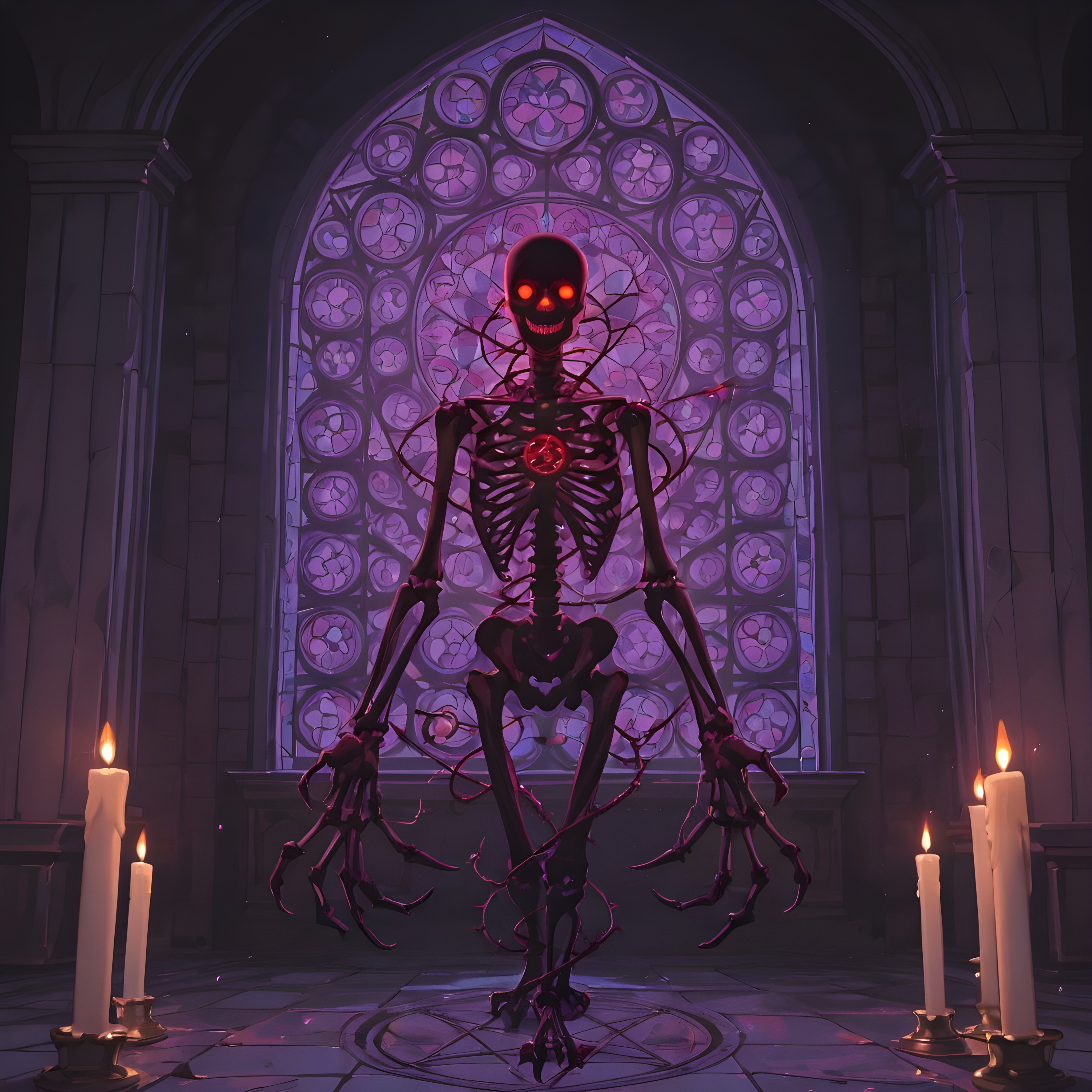
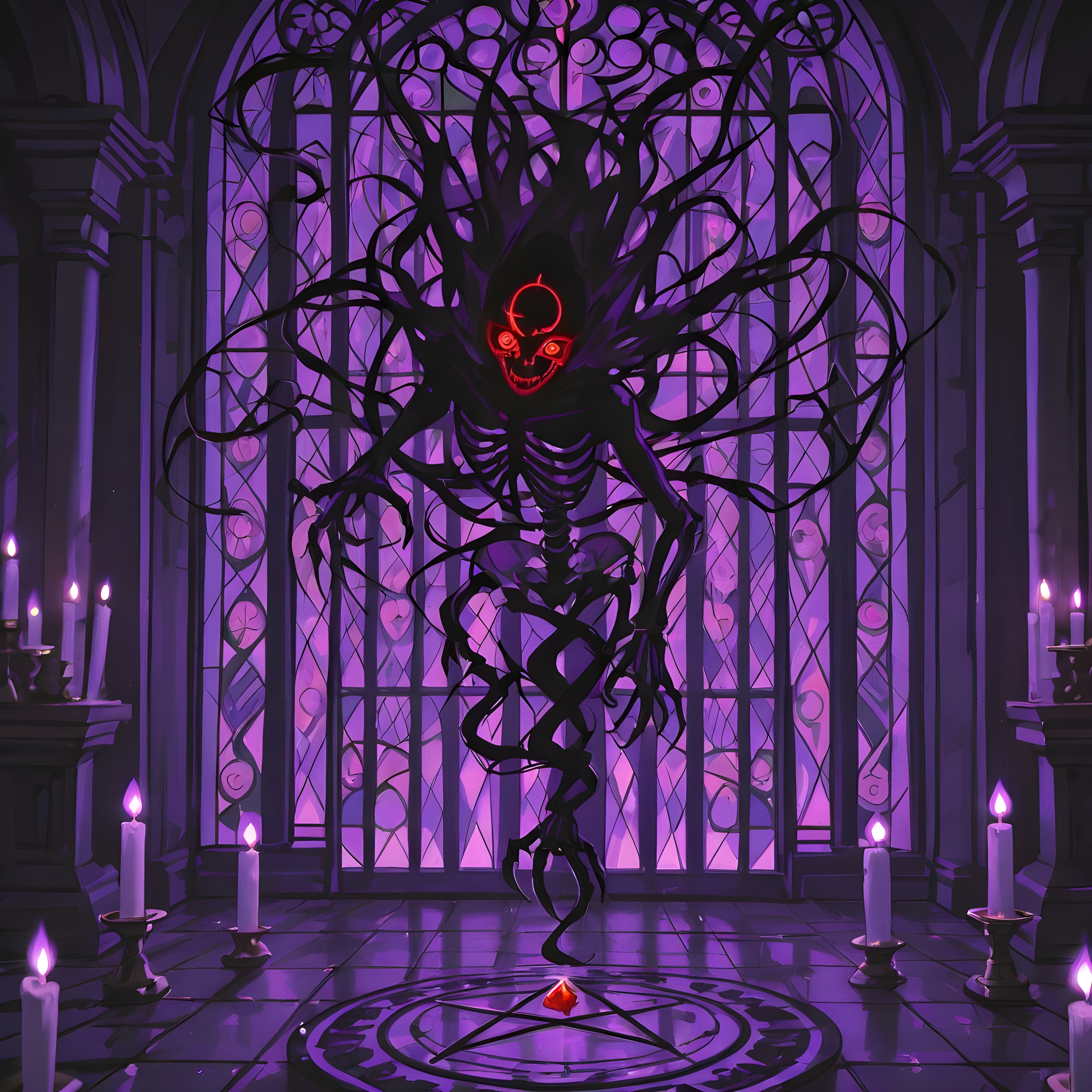
Stained Glass Art Style: The Summoner's Shadow




Details
Download Files (2)
Model description
What does the Lora Model does:
Focuses on dark fantasy / horror aesthetics (e.g., demonic entities, candle-lit rituals, occult symbolism).
Enhances lighting and mood (dim candlelight, glowing eyes, eerie glow effects).
Produces skeletal or monstrous anatomy that fits horror or supernatural imagery.
What It’s Good At
Concept art or dark fantasy illustrations.
Gothic / horror storytelling visuals.
Mood boards or atmospheric art involving occult, ritualistic, or macabre settings.
Thematic consistency — making your dark scenes look cohesive, stylized, and professionally lit.
How It Should Be Used
Apply it to a compatible base model (like Stable Diffusion XL or SD 1.5) with a low to moderate weight (e.g., 0.5–0.8) for natural integration.
Use appropriate prompts like “dark gothic cathedral, demonic ritual, cinematic lighting.”
Adjust negative prompts to avoid unwanted exaggerations (e.g., “disfigured, malformed, low qual
ity”).
What It’s Bad At
Bright, wholesome, or natural scenes (e.g., daylight landscapes, portraits, or modern clean aesthetics).
Accurate human anatomy when pushed to extremes — it might deform faces or bodies to look monstrous.
Fine realism — the focus is on stylization, not photoreal a
ccuracy.
How It Should NOT Be Used:
Not for real people or likeness generation — especially if it could be seen as depicting real individuals in violent or supernatural ways.
Not for explicit or gory content — LoRAs with dark themes can veer into disturbing imagery if prompted irresponsibly.
Not as a general-purpose aesthetic enhancer — it’s a niche model; applying it everywhere will cause strange lighting and tonal mismatches.