BMW 2002 Turbo - 1973



詳細
ファイルをダウンロード (1)
このバージョンについて
モデル説明
The Provocation in Mirror Script: The Jekyll-and-Hyde Legend of the 1973 BMW 2002 Turbo
The 1973 BMW 2002 Turbo is an icon of glorious, defiant contradiction. It was Europe's first-ever series-produced turbocharged automobile, a technological pioneer that served as the spiritual genesis for BMW's entire M-Division. Yet, this 170-horsepower pocket rocket was unveiled at the Frankfurt Motor Show in autumn 1973, coinciding precisely with the start of the 1973 oil crisis. In a new world of fuel rationing, car-free Sundays, and sudden speed limits, the 2002 Turbo was a blatant provocation. As BMW later admitted, the company had built a car that "contradicted the spirit of the times like no automobile before".
The Turbo was the ultimate evolution of the '02' platform that had already saved BMW. Its direct ancestor was the 1971 2002tii, the range-topping model praised for its 130-hp engine and sophisticated Kugelfischer mechanical fuel injection. BMW's nascent Motorsport division, the same engineers developing the 3.0CSL "Batmobile," used the tii as a foundation. They took its 2.0-liter M10 engine and re-engineered it for forced induction, drawing on their experience from winning the 1969 European Touring Car Championship with a turbocharged 02 race car.
The conversion was extensive. Engineers fitted a KKK (Kuhnle, Kopp & Kausch) turbocharger providing 0.55 bar (8 psi) of boost. To prevent the engine from destroying itself, they lowered the compression ratio from the tii's 9.5:1 to a boost-friendly 6.9:1 and added a crucial oil cooler. In a feat of pre-digital engineering, they modified the complex Kugelfischer injection system to deliver the massive amounts of fuel needed under boost.
The result was a 40-horsepower leap to 170 hp at 5,800 rpm, with 240 Nm of torque. In a car weighing just 1,080 kg, this was enough to propel it from 0-100 km/h (62 mph) in around 7.0 seconds and to a top speed of 211 km/h (131 mph), making it one of the fastest cars on German roads.
To manage the power, the chassis was significantly upgraded. The Turbo received bigger, ventilated front disc brakes, larger rear drums, a wider track, and anti-roll bars at both ends. Most importantly, a limited-slip differential was standard equipment, a vital component for maintaining traction.
Despite this, the car's defining characteristic was its notoriously abrupt power delivery. Motoring journalists dubbed it a "Jekyll and Hyde". Below 4,000 rpm, the car felt sluggish; then, the turbo would "suddenly cut-in," delivering a "punch in the kidney's" that sent the car surging forward. This, combined with the era's suspension technology, made the Turbo a "experts-only" machine that "demand[ed] real concentration," earning it a fearsome reputation. Many, as the legend goes, "ended up embedded in trees".
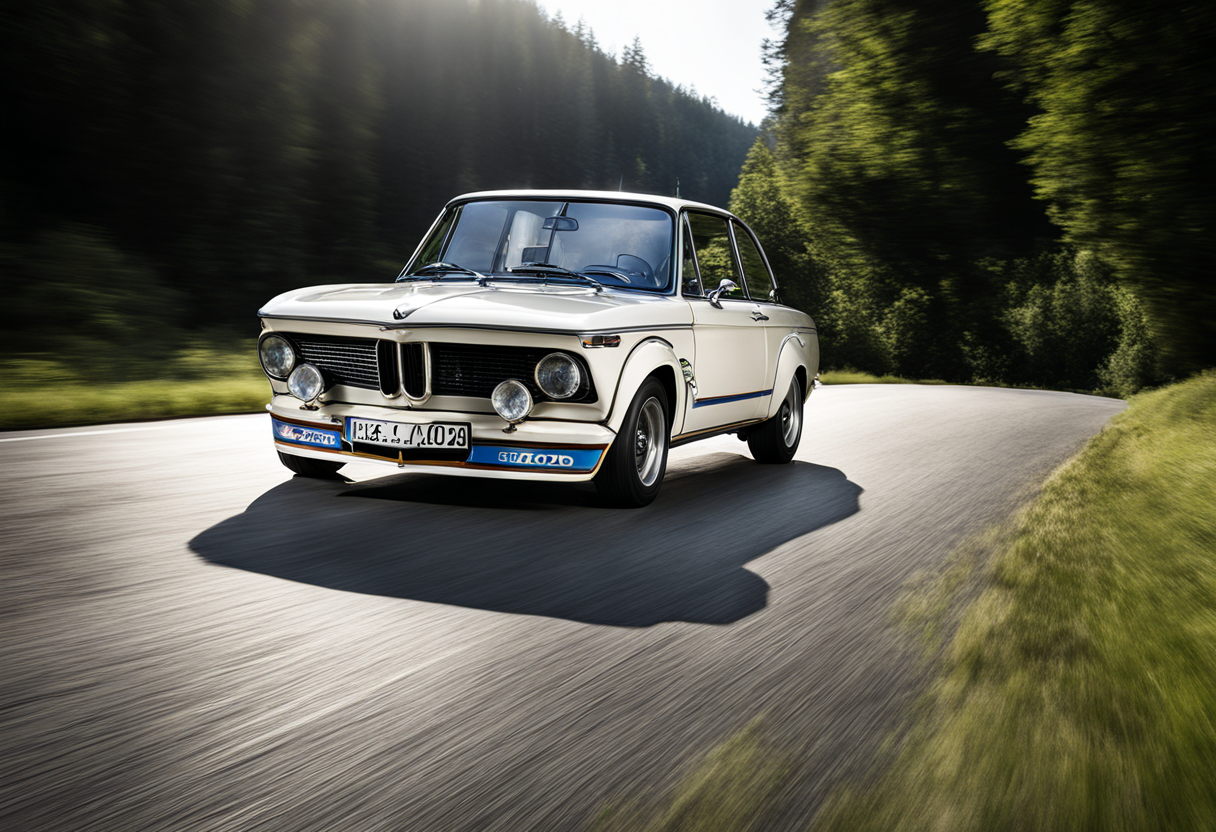
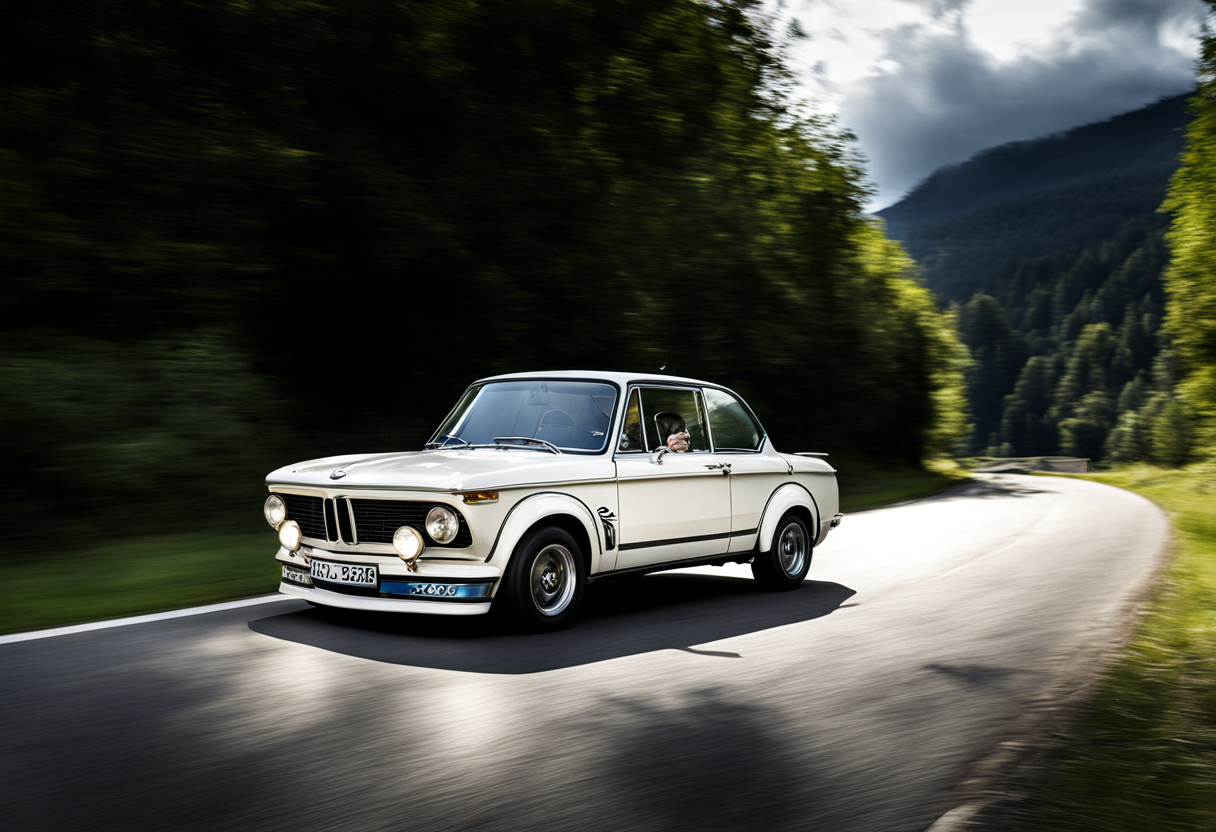
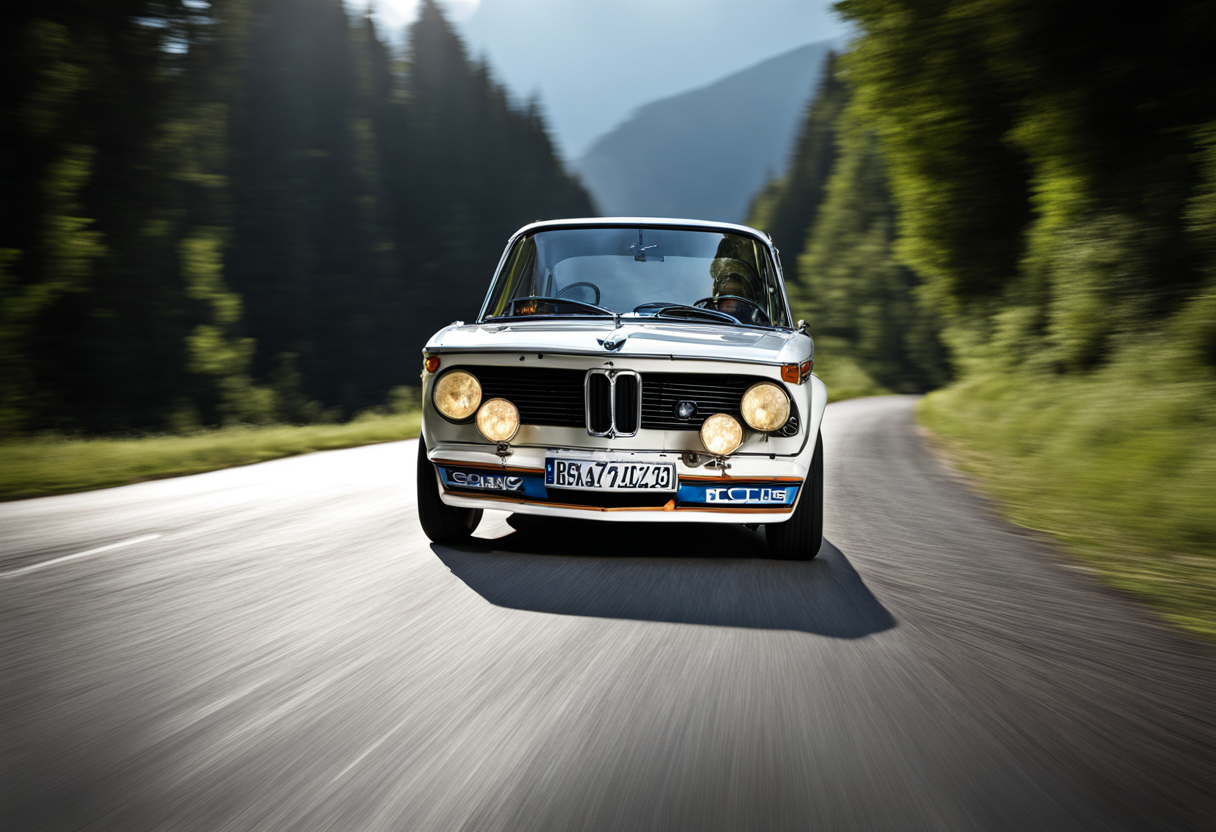
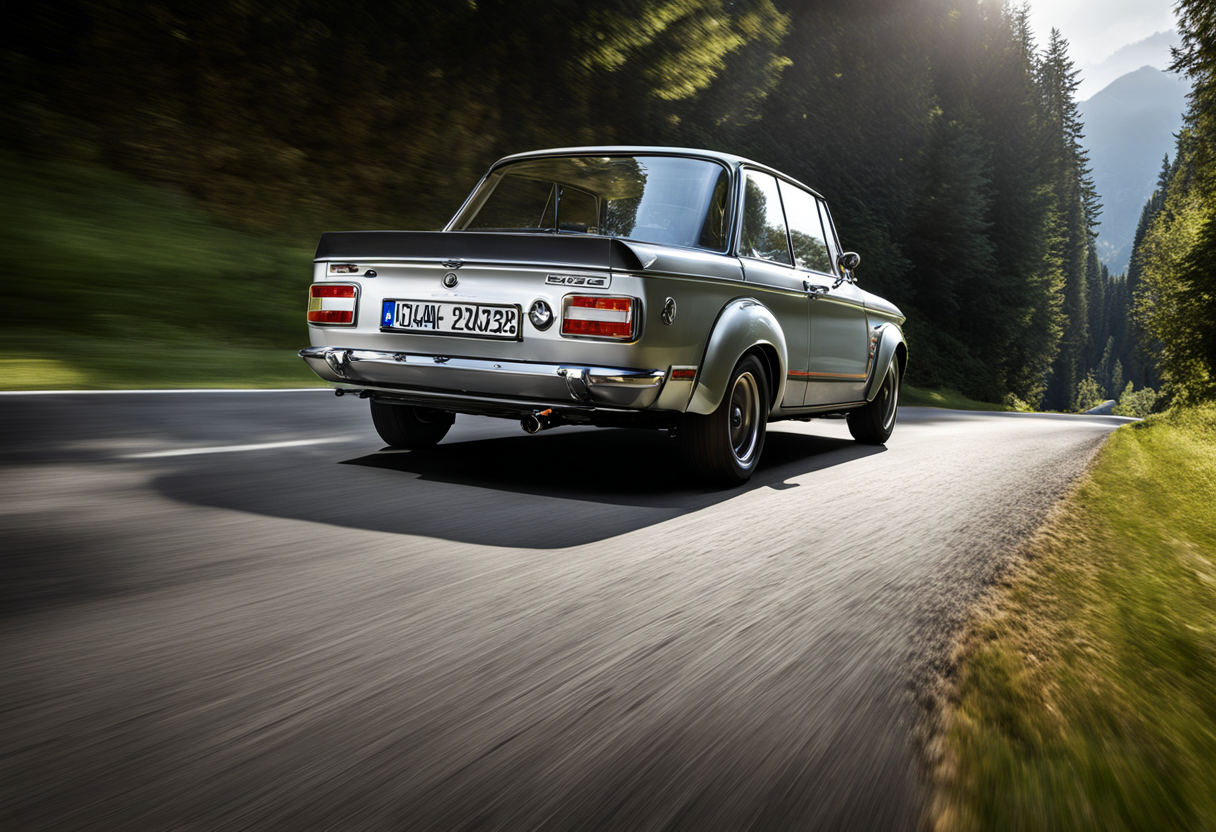
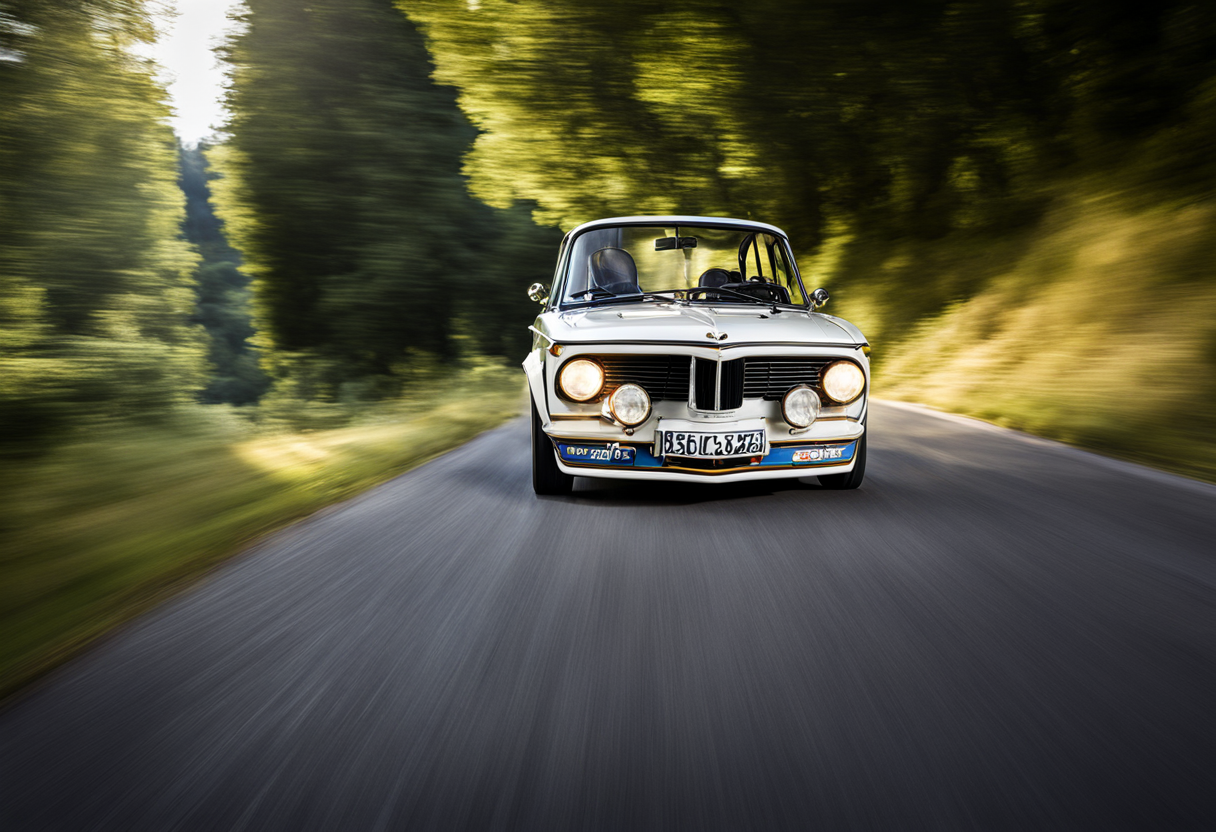
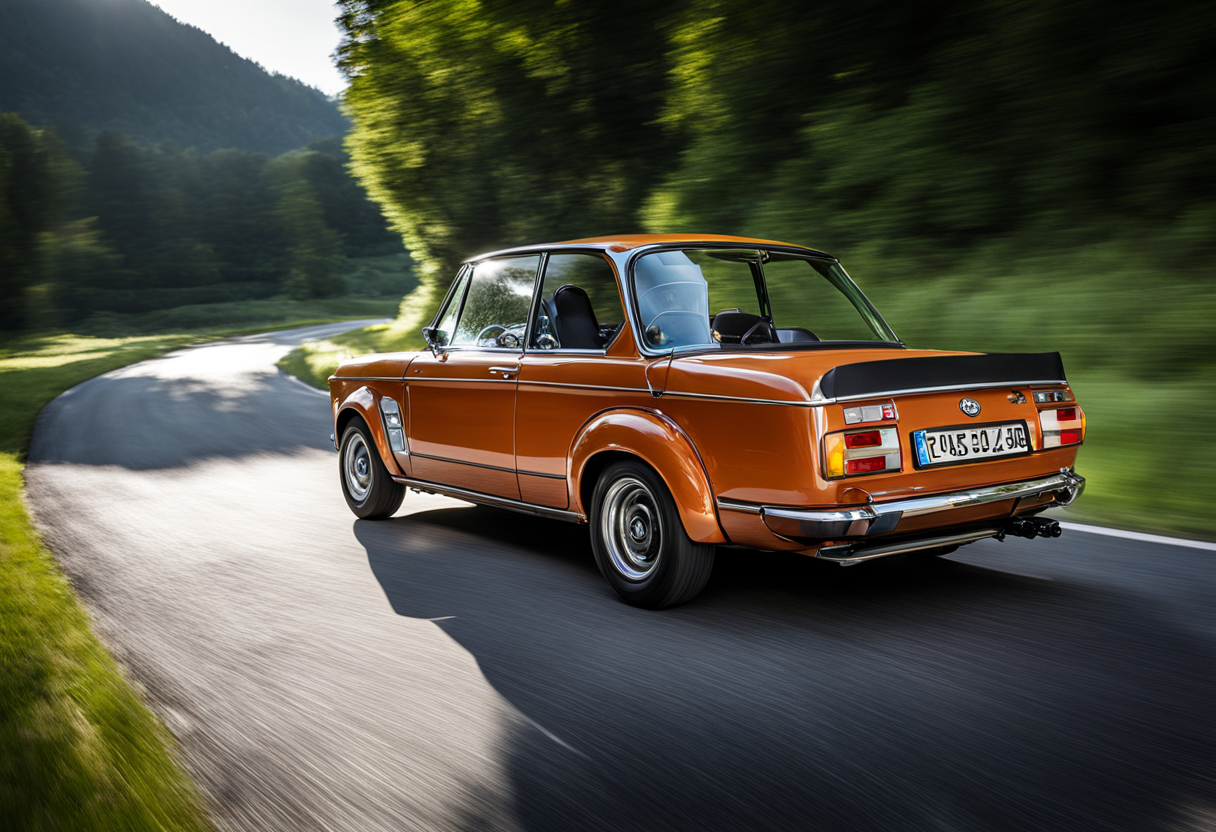
Its styling was as aggressive as its performance. It featured riveted-on fender flares to house wider wheels, a deep front air dam, a rear spoiler, and the iconic BMW Motorsport stripes. The interior was all business, with heavily bolstered sport seats , a three-spoke leather wheel , and a red-finished instrument cluster where the tii's clock was pointedly replaced by a turbo boost gauge.
This "war painting" culminated in the infamous "Turbo 2002" mirror script on the front spoilers of press and show cars, designed to be read in the rearview mirrors of those about to be overtaken. The feature was so provocative that it was debated in the German Bundestag (Parliament) on the grounds that it "endangered road safety". Bowing to immense political pressure, BMW removed the graphic, and no production car ever left the factory with it.
The hostile social and economic climate doomed the 2002 Turbo. Production was halted in November 1974 after just 1,672 examples were built, all in Left-Hand Drive. Today, this scarcity and its rebellious legend have made it a blue-chip collectible, with top examples fetching well over $140,000 at auction. It was a commercial failure that became a profound philosophical success, pioneering the turbocharging technology that defines BMW's entire lineup four decades later.