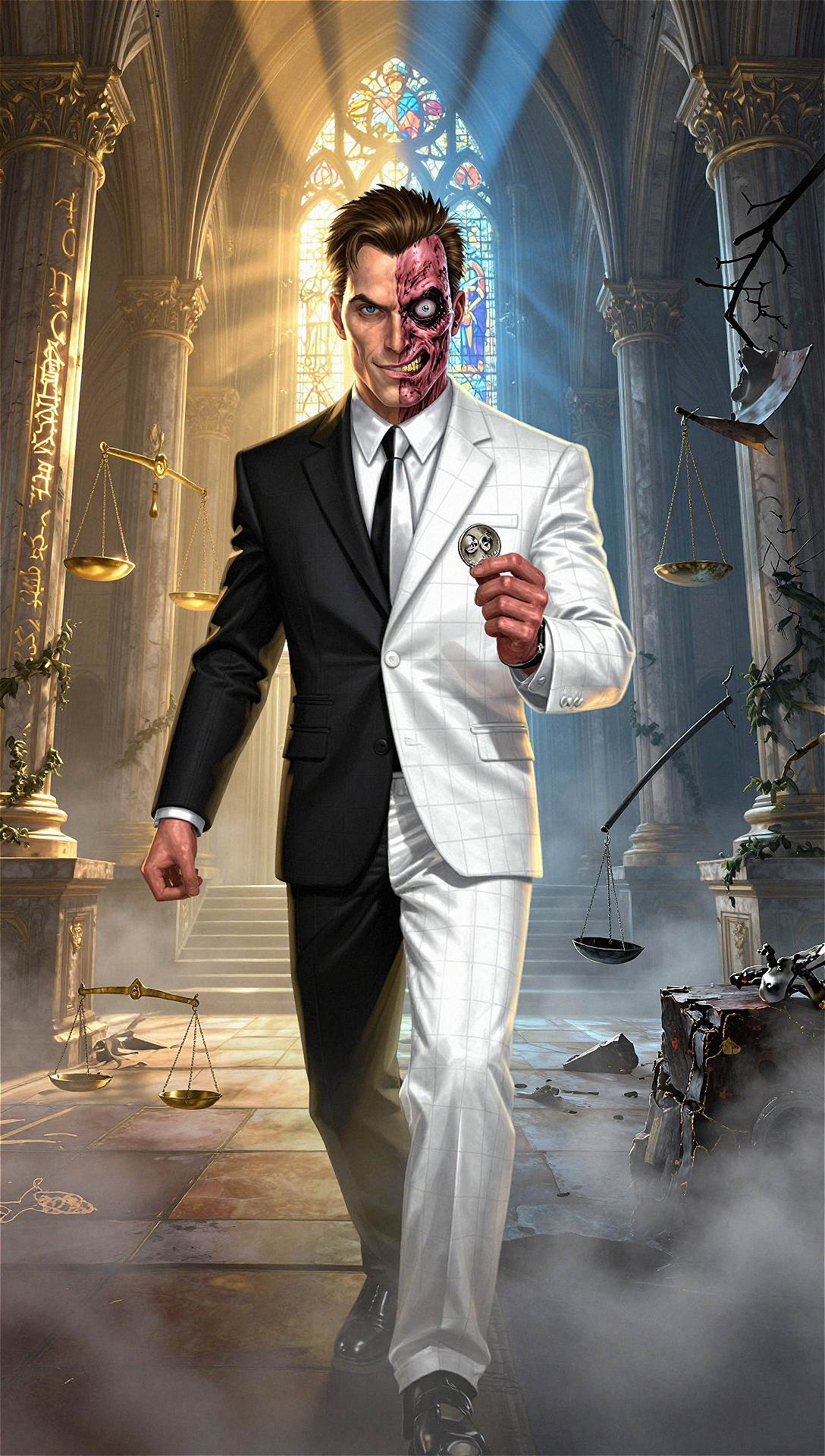
Two-Face (DC Comics | Arkham Asylum | Rule 63)







Details
Download Files (1)
Model description
Two-Face, whose real name is Harvey Dent, is one of Batman's most enduring and tragic villains in DC Comics. Created by Bob Kane and Bill Finger, the character first appeared in Detective Comics #66 in August 1942. Originally introduced as Harvey Kent (later retconned to Dent to avoid confusion with Superman's alter ego), he was depicted as Gotham City's charismatic district attorney and an ally to Batman and Commissioner James Gordon in their fight against organized crime. Dent's transformation into Two-Face occurred when mob boss Sal Maroni threw acid at his face during a courtroom trial, horribly disfiguring the left side and shattering his psyche. This event unleashed a split personality obsessed with duality, chance, and the number two, marking his fall from a symbol of justice to a criminal mastermind.
As Two-Face, Harvey Dent embodies profound psychological conflict, often portrayed with dissociative identity disorder rooted in childhood trauma from an abusive father in modern continuities. He possesses no superpowers but relies on his genius-level intellect, expertise in criminal law and procedures, and proficiency in marksmanship and hand-to-hand combat, honed from his time allied with Batman. His signature trait is flipping a double-headed coin—one side scarred—to make critical decisions, reflecting his internal struggle between good and evil. Two-Face frequently orchestrates crimes themed around duality, such as targeting pairs or committing offenses at times like 10:22, while viewing himself as an agent of twisted fate. This unpredictability, combined with his personal history as Batman's former friend, positions him as a deeply tragic figure in the Dark Knight's rogues gallery.
The character's publication history reflects significant evolution across comic eras. In the Golden and Silver Ages, Two-Face appeared sporadically, sometimes reformed through plastic surgery, but was largely absent until his Bronze Age revival in Batman #234 (1971) by Dennis O'Neil and Neal Adams. Post-Crisis on Infinite Earths revisions, particularly in works like Batman: The Long Halloween (1996–1997) by Jeph Loeb and Tim Sale, deepened his backstory with alliances against Gotham's mob families and a more nuanced descent into madness. Subsequent developments, including temporary cures and relapses in stories such as Batman: Hush (2002–2003) and DC Rebirth arcs, have explored themes of redemption and irreversible corruption, cementing Two-Face as a complex exploration of justice corrupted by trauma.